How to Care for Custom Linen Napkins: Washing, Pressing and Storage
To care for custom linen napkins, wash them by fabric type, keep chlorine bleach and fabric softener away from logos and natural fibers, press them while slightly damp, and store them fully dry in breathable covers. Custom Linen Napkins makes flax linen, cotton, poly-cotton, spun polyester, damask and satin-band napkins, and each one rewards a slightly different routine.
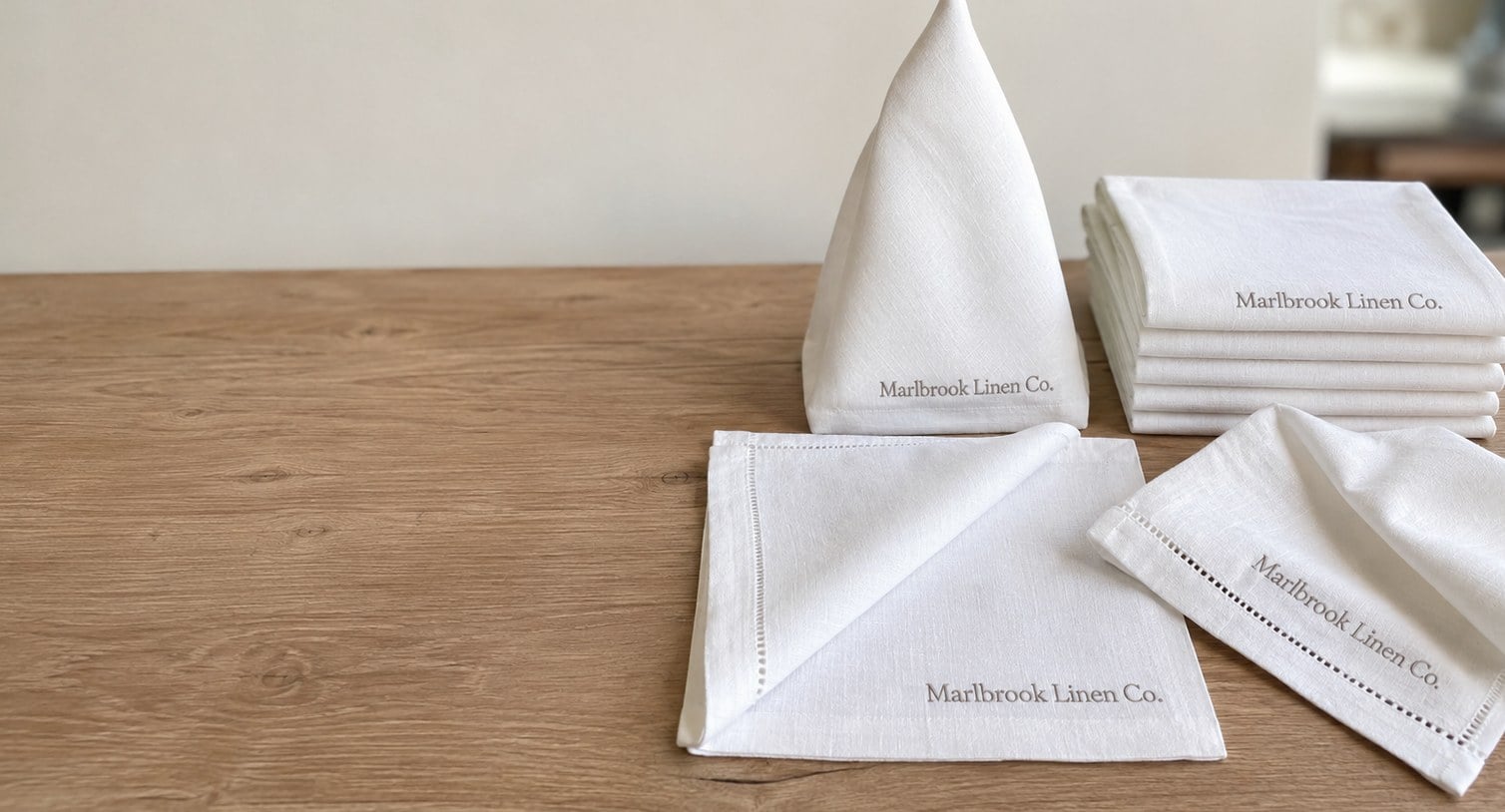
- Wash by fabric: flax linen, cotton and spun polyester each need a different routine
- Keep chlorine bleach off colored napkins and embroidered logos
- Press flax linen and cotton while slightly damp; press embroidery face down
- Store napkins fully dry in breathable covers, never sealed plastic
- Free mockup within 24 hours; about 2 weeks standard turnaround
How should you wash custom linen napkins so they last?
You should wash custom linen napkins according to their fabric, in loads of similar color, with a mild detergent and enough water for the napkins to move freely. Overloading the machine is the quiet cause of most early wear, because crowded napkins rub against each other and against the drum, which roughens linen and fuzzes embroidery.
The fabric you ordered sets the routine. Genuine flax linen softens with every gentle wash, cotton tolerates warmer water, poly-cotton sits between the two, and spun polyester is the most forgiving fabric in commercial laundry. Damask and satin-band napkins carry a woven pattern that looks best when it is not tumbled hard.
| Fabric | Washing | Drying | Pressing |
|---|---|---|---|
| Genuine flax linen | Gentle cycle, mild detergent | Line dry or low heat, remove while damp | Hot iron while slightly damp |
| Cotton | Regular cycle, sort by color | Medium heat, avoid overdrying | Hot iron, light steam |
| Poly-cotton | Regular cycle | Low to medium heat | Medium iron if needed |
| Spun polyester | Regular or commercial cycle | Low heat, fold promptly | Low iron, often not needed |
| Damask and satin-band | Gentle cycle, wash with similar items | Low heat or line dry | Press on the reverse to protect the sheen |
Which laundry products damage custom linen napkins?
The laundry products that damage custom linen napkins most are chlorine bleach, fabric softener and heavy optical brighteners. Each one seems harmless in a single wash, but repeated use shortens the life of the fabric, the color and the decoration on the napkin.
- Chlorine bleach weakens natural fibers over time, can yellow some embroidery threads and strips color from dyed napkins. If white napkins need brightening, an oxygen-based whitener is the gentler choice.
- Fabric softener coats flax linen and cotton with a film that reduces absorbency, so the napkin pushes spills around instead of soaking them up. Linen softens naturally with washing and does not need it.
- Optical brighteners can make colored napkins look washed out and can shift a dark brand color toward a dull tone.
- Overdosing detergent leaves residue that stiffens the cloth and attracts soil.
If your napkins go to a commercial laundry, ask what chemistry it uses on table linen. Many services run a separate formula for colored or decorated linens when they know the napkins carry a logo.
How do you protect embroidered and printed logos in the wash?
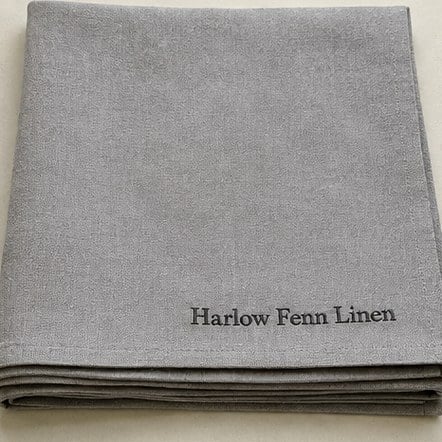
You protect embroidered and printed logos on linen napkins by washing them with similar items, avoiding abrasive companions such as hook-and-loop fasteners or heavy kitchen towels, and keeping heat moderate in the dryer. Embroidery and printing hold up well when the napkin is not being scrubbed against rough fabric.
Embroidered logos are raised, so they take the most friction in a crowded drum. Smaller home loads can go into a mesh laundry bag. When pressing, lay the napkin face down on a thick towel and iron the reverse, which keeps the stitches rounded instead of flattened into the fabric.
Printed logos sit in or on the fibers, so the main enemies are very high heat and harsh chemistry. Iron printed napkins on the reverse or with a pressing cloth over the design, and skip chlorine entirely. Woven-in designs on damask napkins are part of the cloth itself, so they need only the gentle handling the fabric already asks for. The embroidered napkins page shows which fabrics pair best with stitched logos.
What is the right way to dry and press linen napkins?
The right way to dry and press linen napkins is to take them out of the dryer, or off the line, while they are still slightly damp and press them straight away with a hot iron. Flax linen and cotton that dry completely in a hot drum set their wrinkles and turn stiff, and those creases are much harder to remove later.
For a crisp table, press each napkin flat first, then fold it while it is still warm so the fold lines settle neatly. A light spray starch gives flax linen and cotton a more formal finish for banquets and plated dinners, while an unstarched napkin feels softer for bistro and brunch service.
- Remove napkins while slightly damp.
- Shake each one out and smooth the corners square.
- Press the plain fabric with a hot iron for linen and cotton, or a cool iron for spun polyester.
- Press decorated areas from the reverse.
- Fold while warm and let the stack cool before storing.
Spun polyester napkins often need no pressing at all if they are folded as soon as the dryer stops.
How should custom linen napkins be stored between uses?
Custom linen napkins should be stored fully dry, flat or loosely rolled, in a cool, dark place inside breathable cotton covers or closed linen cupboards. Moisture is the biggest storage risk, because a napkin put away even slightly damp can develop mildew spots that rarely wash out.
Sealed plastic bins and bags trap humidity, so save them for short moves rather than long storage. Light is the second risk: colored napkins kept on an open shelf near a window can fade along the exposed edge of the stack, leaving a visible line when they are unfolded.
- Store napkins clean, because stains left in the cloth set over time.
- Refold long-stored flax linen occasionally so the same crease does not weaken the fibers.
- Keep different colors in separate stacks to avoid dye transfer in humid rooms.
- Label stacks by event, outlet or design so the right set comes out first.
For napkins that come out once or twice a year, a final wash and press before the event brings back the fresh look a guest expects.
How do restaurants and caterers manage napkin care with a commercial laundry?
Restaurants and caterers manage custom linen napkin care with a commercial laundry by sharing written care notes with the service, sorting decorated and colored napkins from plain white table linen, and rotating stock so every napkin gets equal use. A branded napkin is an asset, and the laundry treats it better when it knows that.
Give the laundry a short note covering the fabric, whether the logo is embroidered, printed or woven, and any products to avoid, such as chlorine on colored napkins. Ask for colored napkins to be washed in their own load, which protects both the dye and the white linen sharing the route.
Rotation matters as much as chemistry. Put freshly returned napkins at the bottom of the stack and pull from the top, so the whole set wears evenly instead of a few napkins wearing out early. A quick check of each delivery for pulled stitches, frayed corners or set-in stains helps you spot a laundry problem before it spreads across the set. Spun polyester napkins are often the easiest choice for heavy commercial rotation, as the spun polyester napkins page explains.
When is it time to retire or replace custom linen napkins?
Custom linen napkins are ready to retire or replace when the fabric thins enough to see light through it, the embroidery shows loose or pulled stitches, the color has faded unevenly across the set, or stains no longer come out in a normal wash. One or two worn napkins can be pulled quietly, but a set that looks uneven on the table undercuts the logo it carries.
Many buyers replace a portion of the set at a time rather than everything at once. The key is reordering so the new napkins match: the same fabric, color, size and decoration as the originals. Custom Linen Napkins keeps your approved design on file, so a reorder starts from the same artwork and placement.
Retired napkins still have uses. Older flax linen and cotton napkins make excellent bar towels, polishing cloths for glassware or staff-meal napkins, which keeps them out of the guest-facing rotation without wasting them.
How does choosing the right fabric at ordering make napkin care easier?
Choosing the right fabric when you order custom linen napkins makes care easier because the fabric decides how much washing, pressing and attention each napkin needs for the rest of its life. The easiest napkin to care for is the one matched to your service and your laundry from the start.
- Genuine flax linen suits fine dining and events where pressing is part of the routine, and it softens beautifully with care.
- Cotton and poly-cotton balance a natural feel with easier everyday laundering.
- Spun polyester handles heavy commercial washing and holds color well with minimal pressing.
- Damask and satin-band napkins bring a woven sheen for banquets and ask for gentle handling.
Tell Custom Linen Napkins how your napkins will be washed when you request a quote, and the recommendation will reflect it. You receive a free mockup within 24 hours, unlimited free revisions, and you pay nothing until you approve the design. Standard turnaround is about 2 weeks, and the how it works page walks through each step.
Frequently asked questions
Can custom linen napkins go in a tumble dryer?
Custom linen napkins can go in a tumble dryer on low to medium heat, but they should come out while still slightly damp. Flax linen and cotton that dry completely in a hot drum set deep wrinkles and turn stiff. Spun polyester napkins tolerate the dryer best and often need no ironing if folded as soon as the cycle ends.
Is chlorine bleach safe on linen napkins with an embroidered logo?
Chlorine bleach is not a good choice for linen napkins with an embroidered logo, because it weakens natural fibers, can yellow some threads and strips color from dyed fabric. An oxygen-based whitener is gentler on white napkins. Custom Linen Napkins recommends keeping chlorine off colored and decorated napkins entirely so the logo and the cloth age together evenly.
Should fabric softener be used on custom linen napkins?
Fabric softener should be left out when washing custom linen napkins, especially flax linen and cotton. Softener leaves a coating that reduces absorbency, so the napkin smears spills instead of soaking them up. Genuine flax linen grows softer on its own with each gentle wash, which gives the relaxed hand buyers want without the film that softener leaves behind.
How do you iron an embroidered linen napkin without flattening the stitching?
An embroidered linen napkin should be ironed face down on a thick towel, pressing the reverse side of the design. The towel lets the raised stitches sink in rather than being crushed flat, so the logo stays rounded and crisp. Press the plain areas of the napkin normally, using a hot iron for flax linen and cotton and a cooler setting for polyester.
Can custom linen napkins be washed together with tablecloths?
Custom linen napkins can be washed with tablecloths of the same color and similar fabric, as long as the machine is not overloaded. Large tablecloths can wrap around small napkins and twist them, which adds wrinkles and friction. Keep colored napkins away from white table linen, and wash napkins with embroidered logos apart from heavy towels or anything with hook-and-loop fasteners.
Can spray starch be used on printed linen napkins?
Spray starch can be used on printed linen napkins, applied lightly and pressed from the reverse side or under a pressing cloth so the iron never sits directly on the print. Starch gives flax linen and cotton a crisp, formal finish for banquets. Custom Linen Napkins suggests testing on one napkin first, since heavy starch can leave a faint sheen on dark fabric.
How can a restaurant tell when its custom linen napkins need replacing?
A restaurant can tell its custom linen napkins need replacing when the fabric looks thin against the light, embroidery shows loose or pulled stitches, colors fade unevenly across the set, or stains survive a normal wash. Pulling worn napkins from guest service early keeps the table consistent, and older pieces can move on to bar towels or staff meals.
Do damask napkins need different care from plain linen napkins?
Damask napkins need slightly gentler care than plain linen napkins because their woven pattern relies on a smooth surface sheen. Wash them on a gentle cycle with similar items, dry on low heat or a line, and press on the reverse to keep the pattern bright. Custom Linen Napkins also offers satin-band styles, which benefit from the same careful pressing.
Should custom linen napkins be stored in plastic bins?
Custom linen napkins are better stored in breathable cotton covers or closed linen cupboards than in sealed plastic bins. Plastic traps humidity, and a napkin that is even slightly damp can develop mildew spots that rarely wash out. Plastic is fine for a short move, but napkins kept for months should be fully dry, clean and allowed to breathe.
What care notes should a commercial laundry receive for branded napkins?
Branded linen napkins sent to a commercial laundry should come with notes covering the fabric, the decoration method, and any products to avoid, such as chlorine on colored or embroidered napkins. Ask for colored napkins to run in their own load. Custom Linen Napkins can confirm the fabric and decoration details of your order so the notes you give the laundry are accurate.
Do flax linen napkins really get softer over time?
Flax linen napkins do get softer with use, because gentle washing relaxes the natural fibers and gives the cloth a supple, lived-in hand. The change is gradual, and harsh chemistry or very hot drying slows it by stiffening the fabric. Washing with a mild detergent, skipping softener and pressing while damp lets genuine flax linen improve with every service.
Why do spun polyester napkins sometimes pill, and how can that be reduced?
Spun polyester napkins sometimes pill when they rub against rougher fabrics in an overloaded wash or tumble too long on high heat. Washing them with similar polyester items, keeping loads loose and drying on low heat reduces pilling noticeably. Spun polyester remains one of the most durable choices from Custom Linen Napkins for restaurants that send napkins through commercial laundry.
Get a free mockup for your linen napkins
Send your logo or idea and the quantity you have in mind. Custom Linen Napkins returns a free mockup within 24 hours, you approve the design before anything is produced, and standard turnaround is about two weeks with faster options available. Get a custom quote.